


Sonirity
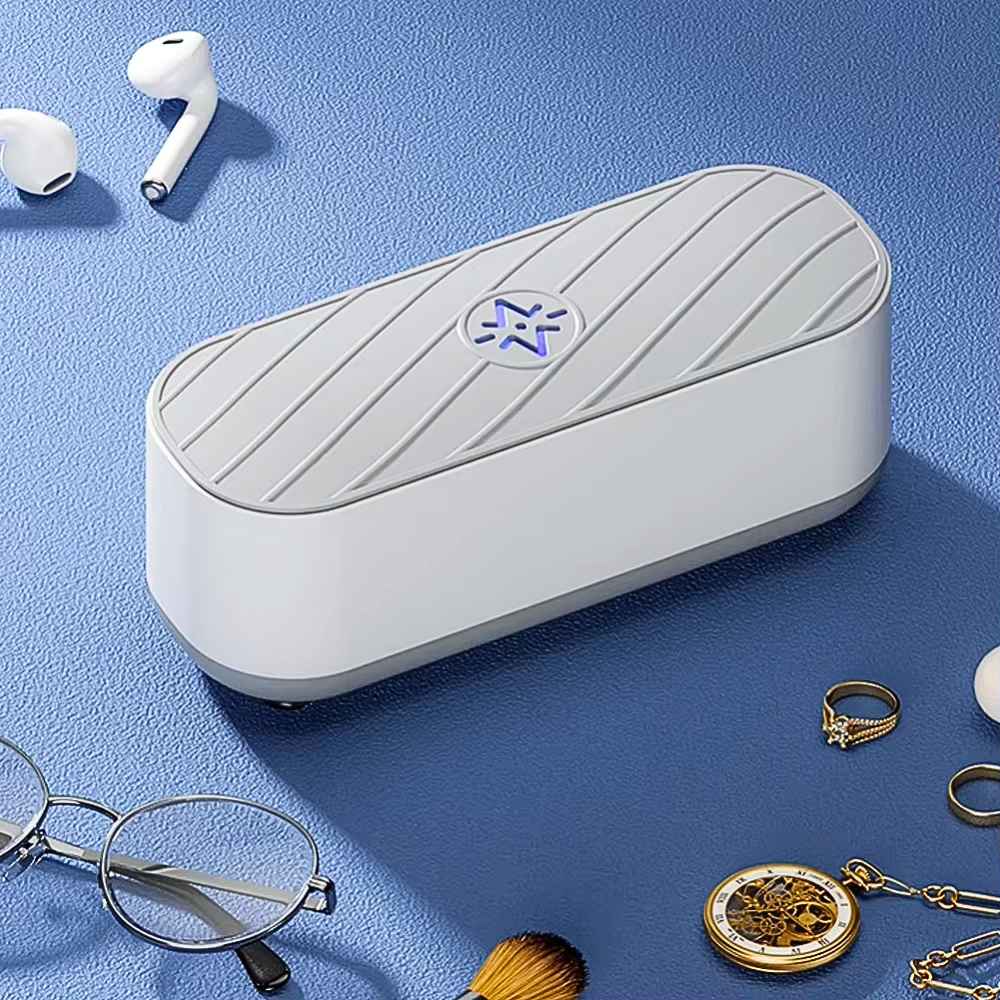
Mini ultrasonic cleaner for Eyeglasses
Mini ultrasonic cleaner for Eyeglasses
☑️ Cleans What Cloths Can't Reach
☑️ Ultrasonic Cavitation Technology
☑️ Auto Shut-Off, No Over-Cleaning
☑️ Results in Minutes, No Scrubbing
Couldn't load pickup availability
A polishing cloth drags surface oils around. A spray bottle floods the lens but misses the accumulation packed into the barrel of a hinge or the coil of a chain link. That's where the residue actually lives in the geometry, not on flat surfaces.
This 45,000Hz mini ultrasonic cleaner generates cavitation bubbles small enough to work inside those recesses. At 2W operating power via USB-C, it runs a full cycle off the same battery pack you charge your earbuds with. Visite our collection of ultrasonic cleaners.
Bénéfices concrets of the mini ultrasonic cleaner:
- 45kHz cavitation frequency, not 40kHz : Most consumer like common ultrasonic glasses cleaner operate at 40kHz. The 5,000Hz difference shrinks the cavitation bubble diameter, which means the cleaning action reaches deeper into narrow geometries, the barrel of an eyeglass hinge, the inner face of a stone setting, the textured surface of a watchband link, without increasing agitation energy that could stress delicate adhesives.
- 2W draw, USB-C rechargeable : Plug it into a laptop, a power bank, or a nightstand charger. There's no 110V requirement, no cord to leave behind. The 3.7V internal battery holds multiple cycles between charges, useful if you're running it at a desk with no free outlet nearby.
- 190 × 72 × 70mm footprint : That's smaller than most TV remote controls. It sits on a bathroom counter without taking over the sink area, and fits lengthwise in a toiletry bag without forcing anything out.
- UV sterilization on the USB-C model : The rechargeable version includes an ultraviolet function worth noting for items like mouthguards or baby bottle nipples where biofilm removal matters as much as visible cleaning. Battery-powered variants skip this feature entirely, so it's worth choosing the USB-C version specifically.
Specs That Actually Matter on the mini ultrasonic cleaner:
|
Spec |
Why it matters for you |
|
45,000Hz frequency |
Finer cavitation reaches grooves and settings a standard 40kHz unit can't penetrate as effectively |
|
USB-C rechargeable |
No wall outlet dependency, runs off any power bank or laptop port |
|
190 × 72 × 70mm |
Fits in a bathroom cabinet drawer or a toiletry bag side pocket without reorganizing anything |
|
UV function (USB-C model only) |
Adds a sterilization layer for dental appliances or baby accessories, absent in the battery version |
Mini ultrasonic cleaner Built For the Amateur Gemologist Cleaning Stone Settings:
You set stones yourself, or you collect vintage pieces with intricate metalwork. A prong setting holds grime in four contact points that a polishing cloth slides over completely. Drop the piece in for 3 minutes and the 45kHz vibration dislodges what's been accumulating since the last time you wore it. I ran a silver Art Deco brooch through it expecting modest results, what came off the filigree after four minutes was dark enough that I almost didn't believe it had come from the piece.
One caveat: the manufacturer explicitly flags low-hardness pearls, tortoiseshell, and electroplated pieces as incompatible. That's an honest limitation worth knowing before you drop in anything with a fragile surface treatment.
Share


FAQ - Ultrasonic cleaner
What is an ultrasonic cleaner and how does cavitation work?
An ultrasonic cleaner uses a transducer to project high-frequency sound waves (typically 40 kHz) through a liquid bath. Those waves create and collapse millions of microscopic bubbles per second a process called acoustic cavitation. Each collapse generates a localized pressure jet that physically dislodges contaminants from every surface it reaches, including recesses, hinge barrels, prong settings, and blind holes that no brush can access.
The result is a contact-free clean that outperforms manual methods in both speed and thoroughness. A professional jeweler in Denver running an ultrasonic tank for 4 minutes on a gold ring pulls out more skin oil and lotion residue than 10 minutes of brushing could reach not because the machine is more powerful, but because cavitation reaches geometry that bristles physically cannot.
How long does an ultrasonic cleaning cycle take?
Cycle time depends on material and soil type, not machine power alone. Defaulting to the longest cycle is not safer over-cycling at elevated temperature can damage coatings and loosen adhesive-held components on items that were otherwise compatible.
Glasses (light soiling) : 2–4 min 50°C
Gold / platinum jewelry : 3–6 min 60°C
Retainer / aligner (mineral deposits) : 5–8 min 45°C
Watch bracelet (no movement) 5–8 min 50°C
Dental instruments : 10–15 min 60°C
Gun parts (carbon fouling) : 15–20 min 60°C
Carburetor bodies : 15–20 min 65°C
How do I contact Sonirity support?
📧 contact.sonirity@gmail.com
For product selection guidance, order questions, returns, and technical troubleshooting. For fastest response on product compatibility questions, include the item you're trying to clean and the model you're considering, Owen reviews all technical inquiries personally.