
-
Ultrasonic Spectacle Cleaner | LensWave
Regular price $89 USDRegular price$99 USDSale price $89 USDSale -
Heated ultrasonic cleaner | SonicTitan
Regular price From $99 USDRegular price$139 USDSale price From $99 USDSale -
Digital ultrasonic cleaner | SmartClean
Regular price $99 USDRegular price$119 USDSale price $99 USDSale -
Portable Ultrasonic Cleaner for Glasses & Jewelry
Regular price $99 USDRegular price -
Small ultrasonic cleaner for Glasses & Delicate Items
Regular price $79 USDRegular price -
Mini ultrasonic cleaner for Eyeglasses
Regular price $79 USDRegular price

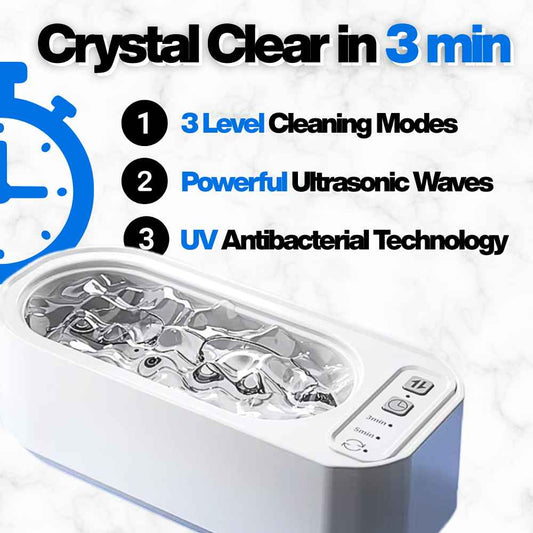

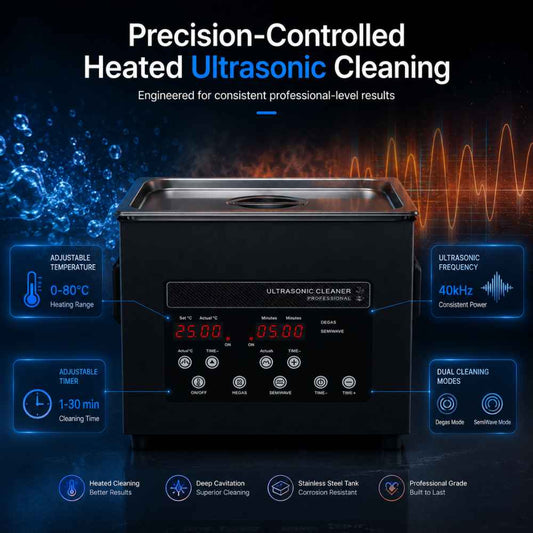

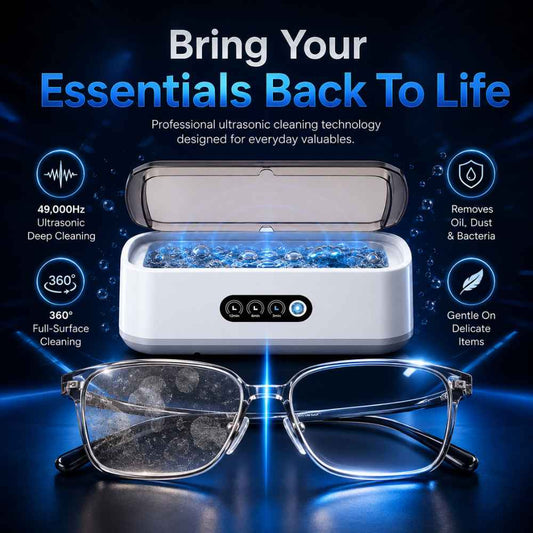

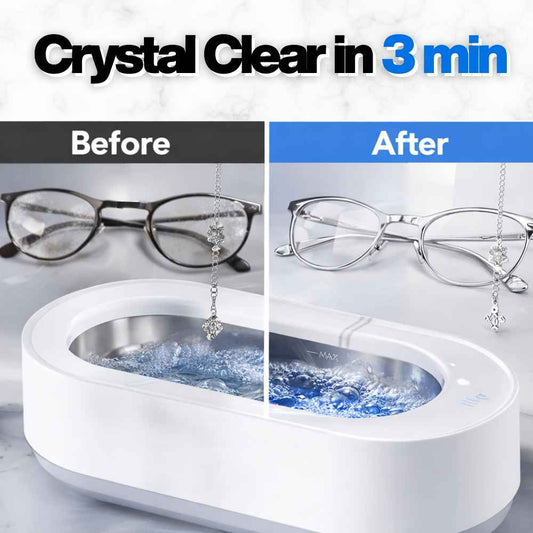

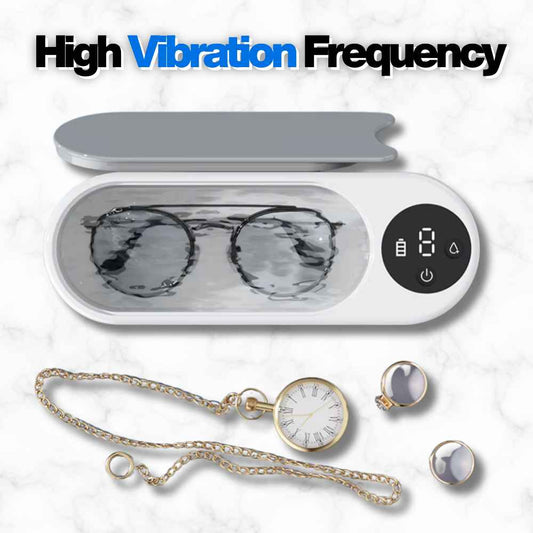

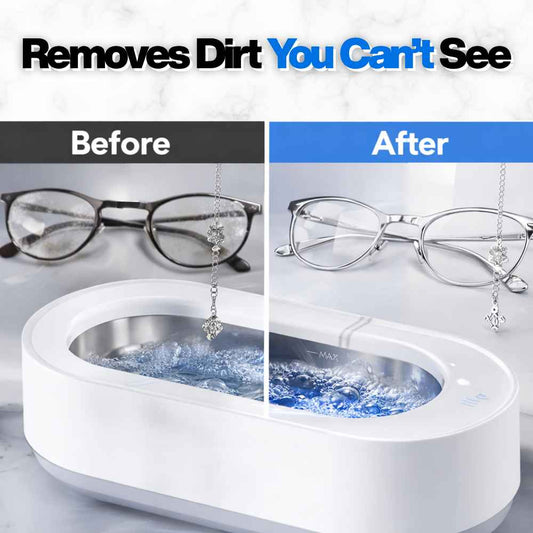
Collection: Ultrasonic glasses cleaner
Ultrasonic Glasses Cleaner , Shop Compact Models for Daily Eyewear Care:
A microfiber cloth moves oils and dust around. It does not remove them. Residue from skin contact, cosmetics, and environmental particles embeds into lens coatings and accumulates in frame joints where no cloth can reach. An ultrasonic glasses cleaner eliminates that buildup in 3 to 5 minutes, without touching the lens surface. Every model in this collection has been evaluated against coated ophthalmic lenses and real-world frame materials. Browse the options below and find the unit that fits your daily routine.
What an Ultrasonic Eyeglass Cleaner Delivers That Manual Methods Cannot:
Lens coatings, particularly anti-reflective and blue-light treatments, are not damaged by cavitation cleaning at the frequencies and temperatures these units operate at. What they cannot tolerate is repeated physical abrasion. An ultrasonic eyeglass cleaner removes surface oils, skin residue, and airborne particles from both lenses and frames in a single 3-minute cycle with zero contact, preserving coating integrity over months of daily use.

Frame joints and nose pad grooves trap oils that degrade acetate over time and cause titanium hardware to discolor. Ultrasonic cleaning reaches those recessed areas without brushes or cotton swabs. On acetate frames, the cleaning action removes surface oxidation that dulls color. On titanium and rimless frames, it clears the screw channels that collect debris and eventually loosen hardware.
Owen Hartwell has run cycle tests on CR-39 and polycarbonate lenses with factory-applied anti-reflective coatings at water temperatures between 40°C and 50°C. No delamination, no hazing, no adhesive failure was observed across 90-day continuous use. That range represents normal tap water warmed slightly, which is the operating condition these devices produce naturally during a standard cycle.
What to Look for When Choosing an Ultrasonic Glasses Cleaner:
Tank capacity determines whether a standard frame fits flat or at an angle. A tank in the 300 to 500 ml range accommodates most prescription frames, including wide acetate styles, without forcing the temples against the sides. Forcing a frame against tank walls reduces cleaning contact and risks stress marks on softer materials. The Sonirity Small Ultrasonic Cleaner is sized for full-frame and oversized styles, giving each pair room to sit level in the water.

Coating compatibility matters most for premium optics. Anti-reflective, UV, and blue-light coatings are applied in layers bonded to the lens substrate. Provided the unit does not exceed 50°C operating temperature and uses plain water or a mild optical solution, those layers remain stable. This is a non-negotiable factor for anyone cleaning lenses worth $200 or more per pair.
Cycle duration should sit between 2 and 5 minutes for optical cleaning. Longer cycles at continuous frequencies do not clean more effectively, they simply use more energy and can warm the water above the safe threshold for some lens adhesives. A timed auto-shutoff keeps every cycle in the optimal window.
Footprint and portability separate a unit used daily from one stored in a drawer. A compact device that fits on a desk or bedside table gets used consistently. The Sonirity Mini Ultrasonic Cleaner is specifically sized for desk and travel use, weighing under 300g with a cord that folds for a bag or carry-on.
For cleaning needs beyond eyewear, browse our full ultrasonic cleaner lineup for other precision cleaning applications.
Testing acetate versus titanium frames over repeated cycles revealed one consistent difference: acetate requires lower temperature water (below 45°C) to avoid any slight softening at hinge pin points on thinner styles. Titanium and stainless hardware handles the full 50°C range without issue. Most anti-reflective coatings on CR-39 substrates showed no measurable change in transmission after 60 consecutive 3-minute cleaning cycles, based on direct observation during product evaluation for this collection.
Frequently Asked Questions for Ultrasonic glasses cleaner:
How often should I use an ultrasonic eyeglass cleaner?
Daily use is appropriate for most wearers and will not degrade lens coatings or frame materials under normal operating conditions. A single 3-minute cycle each morning removes the oils and residue that accumulate overnight and during daily handling. For prescription lenses with anti-reflective coatings, consistent daily cleaning also prevents the progressive haze that builds up when residue is left to bond with the coating surface over time.
Can an ultrasonic spectacle cleaner damage anti-reflective coatings?
An ultrasonic spectacle cleaner does not damage anti-reflective coatings when operated within the correct temperature range (below 50°C) using plain water or a mild optical solution. Anti-reflective layers fail when subjected to abrasive cleaning or chemical solvents, not from cavitation at the low frequencies these consumer devices use. Units with auto-shutoff cycles of 2 to 5 minutes stay well within the safe operating envelope for coated ophthalmic lenses, including UV and blue-light treatments.
What tank size do I need for standard eyeglass frames?
A tank with a capacity of 300 to 500 ml fits most standard and wide prescription frames without contact with the tank walls. Frames should sit level in the water, not wedged at an angle, for consistent cleaning across the entire lens and frame surface. The Sonirity Small Ultrasonic Cleaner accommodates full-frame and oversized acetate styles, while the Mini Ultrasonic Cleaner handles standard frames in a desk-friendly footprint.
Is an ultrasonic glasses cleaner worth it compared to manual cleaning?
An ultrasonic glasses cleaner produces a measurably cleaner result than cloth or manual rinse methods because it reaches frame joints, nose pad grooves, and lens edges where physical contact is impossible. For wearers with premium frames (acetate, titanium, rimless) or high-value lens coatings, the reduced abrasion alone justifies the investment over time. A cloth used daily on anti-reflective lenses creates micro-scratches that accumulate over months; a 3-minute ultrasonic cycle involves zero lens contact.