


Not every ultrasonic cleaner solution cleans the same, and the wrong formula leaves residue, damages soft metals, or kills cavitation efficiency within two cycles. Every formula in this collection is validated against ASTM F2867, matched to a specific application, and formulated to work with your machine's frequency, not against it.
Ultrasonic Cleaning Solution for Every Application:
The right formula depends on what goes into your tank, not on what bottle looks most generic on a shelf. Sonirity carries application-specific concentrates because one built for 18k gold prong settings behaves fundamentally differently from one designed to strip carbon deposits off engine components.
- Jewelry and precious metals, pH-neutral concentrate that lifts skin oils and tarnish without attacking plating or solder joints. Available now: CAVIQ Ultrasonic Jewelry Cleaner Solution.
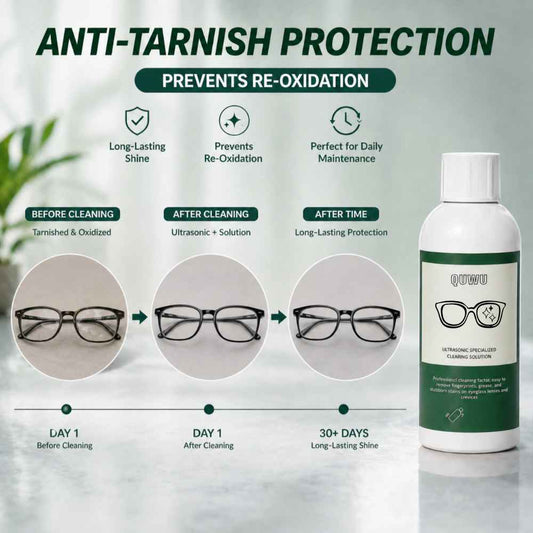
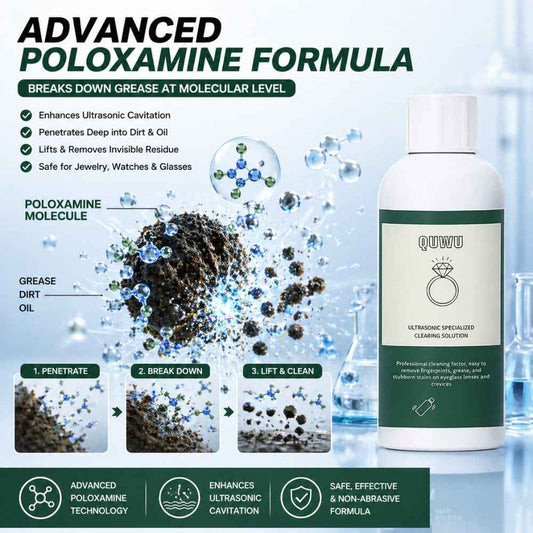
- Eyeglasses and optical lenses, poloxamine-based concentrate that breaks down lipid residue and fingerprint oil without degrading AR coatings or warping acetate frames. Available now: Ultrasonic Glasses Cleaner Solution.
- Carburetor and engine component formulas, alkaline degreasing concentrates rated for cast aluminum, zinc alloys, and brass jets. Coming soon.
- Firearms and gun part formulas, carbon and copper fouling removal, compatible with carbon steel and parkerized finishes. Coming soon.
- Dental retainer and orthodontic appliance formulas, low-foam, body-safe concentrate for acrylic and wire hardware. Coming soon.
- General-purpose degreasing formulas, broad-compatibility concentrates for mixed workshop loads, PCBs, and watch components. Coming soon.

Cleaning Fluid Ultrasonic Grade: What Sets a Proper Formula Apart?
Standard dish soap or ammonia-based glass cleaner is not cleaning fluid, ultrasonic grade. Consumer detergents foam under cavitation, which collapses the bubble cloud that does the actual cleaning work. A purpose-built ultrasonic cleaning fluid controls surface tension precisely so cavitation operates at full intensity from the first minute of the cycle.
Three properties separate a professional formula from a workaround: controlled foaming index below 40 mm at 40 kHz, a pH matched to the target material (7.5–9.5 for most metals, 6.5–8.0 for soft stones and acrylics), and a rinse-away chemistry that leaves zero mineral deposit on drying, no white film, no secondary buffing required.
Pro Tip from a Ultrasonic Cleaning Specialist: If your current formula leaves a chalky white film after the rinse cycle, the issue is dissolved mineral solids in the concentrate, not your machine. Switch to a distilled-water-formulated concentrate, or pre-dilute with distilled water at a 1:10 ratio. Hard tap water above 150 ppm hardness accelerates residue buildup and reduces cleaning cycle life by up to 30%.
Ultrasonic Cleaner Liquid, Compatibility and Safety Reference:
Choosing the wrong ultrasonic cleaner liquid for your material is the most common source of surface damage reported by both hobbyists and shop technicians. Soft stones (opal, turquoise, emerald), organic materials (pearl, coral, amber), and anodized aluminum are all vulnerable to pH levels outside their tolerance window. Use the table below before loading any new material type.
| Application | Recommended Formula Type | pH Range | Safe For |
|---|---|---|---|
| Jewelry and precious metals | pH-neutral poloxamine concentrate | 7.0–8.5 | Gold, silver, platinum, cubic zirconia, diamond, sapphire, ruby |
| Watch and clock parts | Low-foam neutral-to-mild alkaline | 7.5–9.0 | Brass, steel, titanium, crystal glass |
| Dental retainers and appliances | Body-safe low-foam neutral | 6.5–8.0 | Acrylic, wire, cobalt-chrome alloy |
| Carburetor and engine components | Alkaline degreasing concentrate | 9.5–11.5 | Aluminum (sealed), brass, cast iron, zinc alloy |
| Firearms and gun components | Alkaline carbon-stripping concentrate | 9.0–11.0 | Carbon steel, stainless steel, parkerized finish, polymer |
| PCB and electronics | Aqueous flux-removal concentrate | 8.0–9.5 | FR4, solder joints, copper traces (no tin whisker risk) |
Note: Soft stones, pearls, and organic gems are not listed above because they are incompatible with ultrasonic cleaning regardless of formula choice. Cavitation micro-implosions fracture inclusion-heavy stones and delaminate nacre layers in pearls. If your piece contains these materials, do not use an ultrasonic bath.

Frequently Asked Questions about ultrasonic solution:
What solution do you use in an ultrasonic cleaner?
Use a purpose-formulated ultrasonic cleaner solution matched to your material, never plain water, dish soap, or ammonia-based cleaners. For most jewelry and metal applications, a poloxamine-based concentrate diluted at 1:10 to 1:20 with distilled water works across a broad pH range of 7.0–9.0 and delivers full cavitation efficiency without foaming. For engine parts and gun components, switch to an alkaline degreaser rated above pH 9.5. ASTM F2867 provides the verification standard for cleaning efficacy on metal parts across these formula types.
Are ultrasonic cleaning solutions safe to use at home?
Aqueous (water-based) ultrasonic cleaning solutions are safe for home use when handled with basic precautions, avoid skin contact with concentrated formula and ensure ventilation during heating cycles above 50°C. Solvent-based ultrasonic fluids are a different category: the EPA classifies many solvent concentrations as VOC-regulated substances under 40 CFR Part 63, and OSHA's PEL table (29 CFR 1910.1000) sets exposure limits that make enclosed home use problematic without proper ventilation equipment. All Sonirity formulas are aqueous concentrates, no solvent exposure risk.
What dilution ratio should I use for ultrasonic cleaning solution?
The standard dilution for most aqueous ultrasonic cleaning concentrates is 1 part solution to 10–20 parts distilled water (5–10% concentration by volume). For light contamination on jewelry or watch parts, a 1:20 ratio (5%) covers a full 8-minute cycle at 40°C without chemical waste. For heavy grease, carbon deposits, or gun fouling, a 1:10 ratio (10%) and a cycle time of 15–20 minutes at 50–60°C delivers measurably better results. Never exceed the manufacturer's maximum concentration, above 15% in most formulas, excess surfactant suppresses rather than enhances cavitation.
If you are still deciding which formula type fits your specific material, the ultrasonic cleaner solution compatibility guide by material covers every major substrate in detail. For a full breakdown of the technology behind the cleaning process, see how ultrasonic cleaners work.