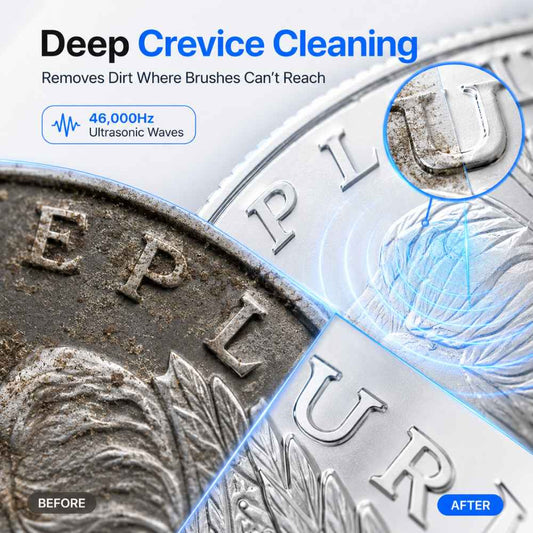
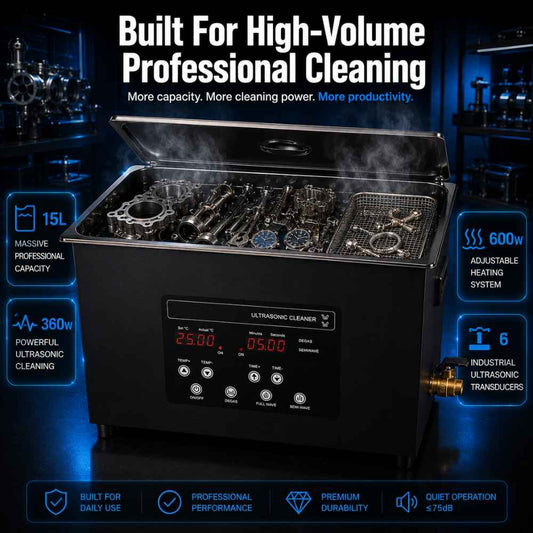
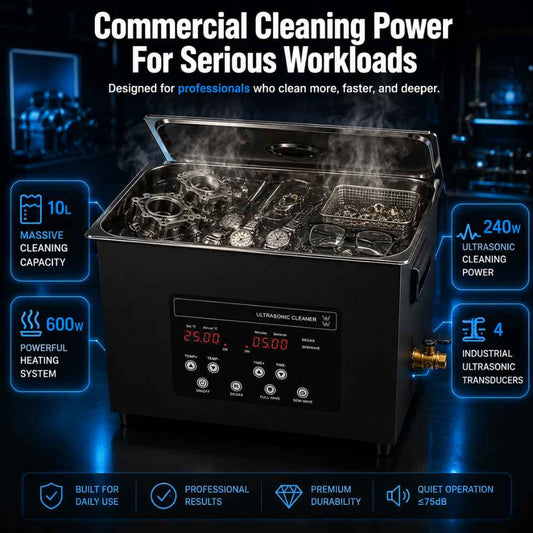
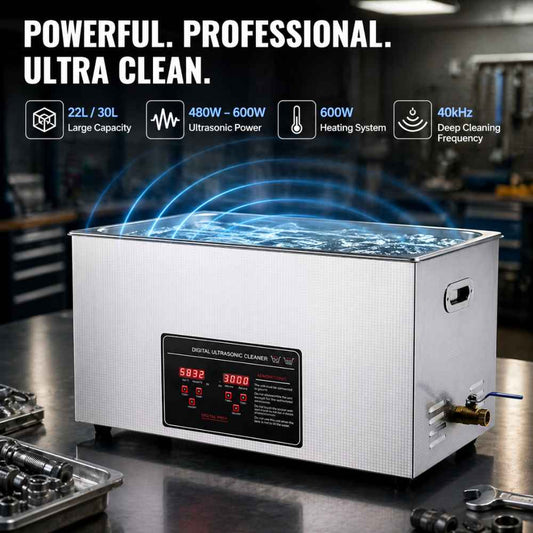
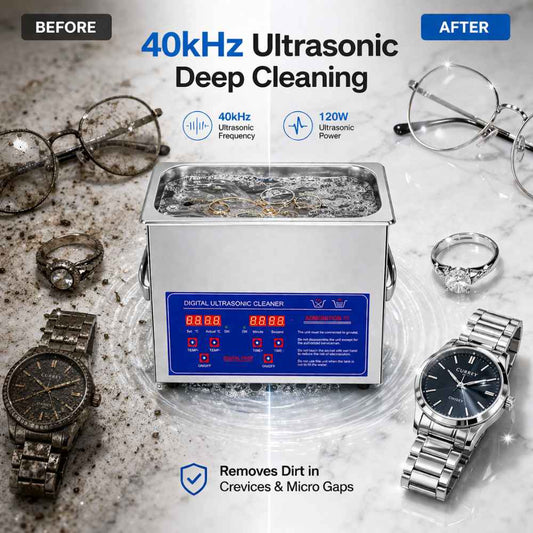
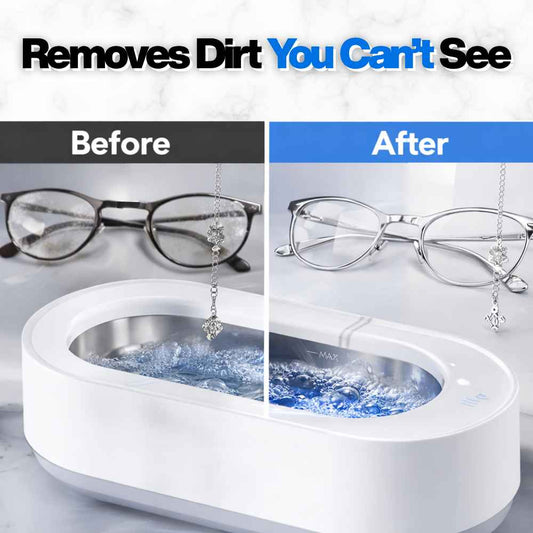
Brushes leave residue. Solvents leave residue and a headache. Ultrasonic cleaning uses 40kHz pressure waves to collapse microscopic bubbles against every surface , including the recesses no tool reaches. From a travel-sized USB unit for your retainer to a 6L heated tank for firearm components, there's a cleaner sized for what you actually need to clean.
A 500mL compact handles retainers, rings, and watch straps in one cycle. A 2L mid-range fits a full set of carb jets or several pairs of glasses at once. Beyond 3L, you're cleaning tools, gun slides, or dental instrument trays , and you want a heated bath (50–80°C) to break down oils and carbon. Match the tank to your largest regular item, not your occasional one.
Shop by use
Most popular
Compact portable cleaner
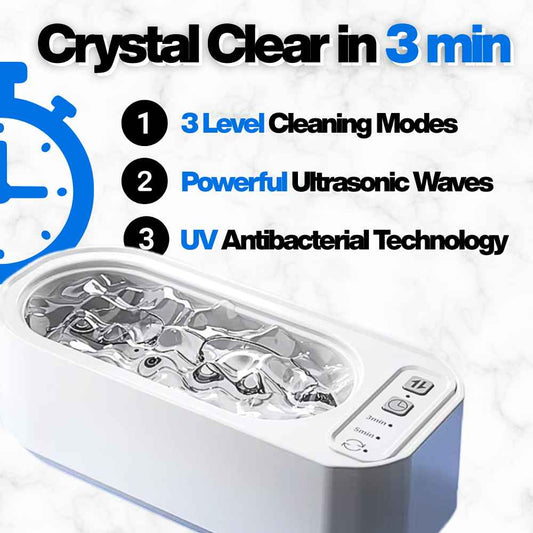
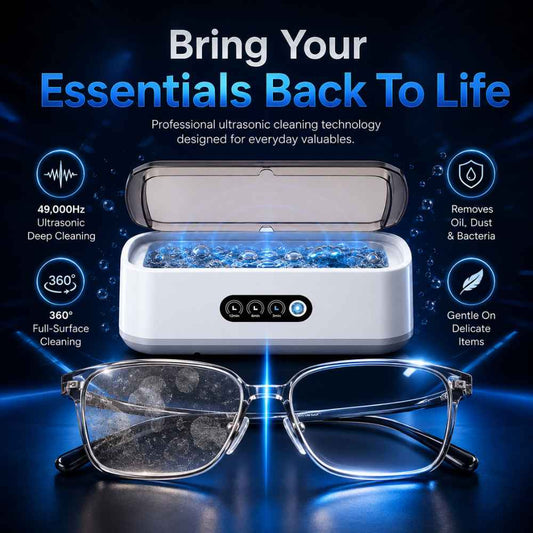
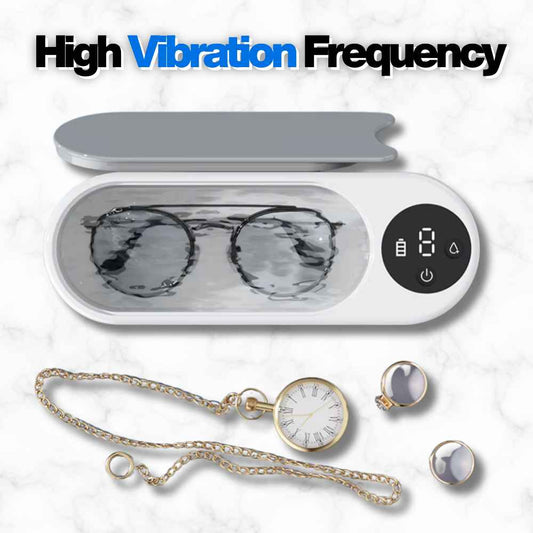
USB-powered, under 9 inches long. Fits in a toiletry bag. Runs a full cycle on a power bank. Built for retainers, aligners, rings, and daily glasses. One button. Like our perfect ultrasonic glasses cleaner
1–2L tank with LED countdown and auto-shutoff. Precise cycle control for delicate items , watch movements, cameo brooches, embossed silverware.
Ideal for: watch collectors, jewelry hobbyists, home use
Heated ultrasonic cleaner
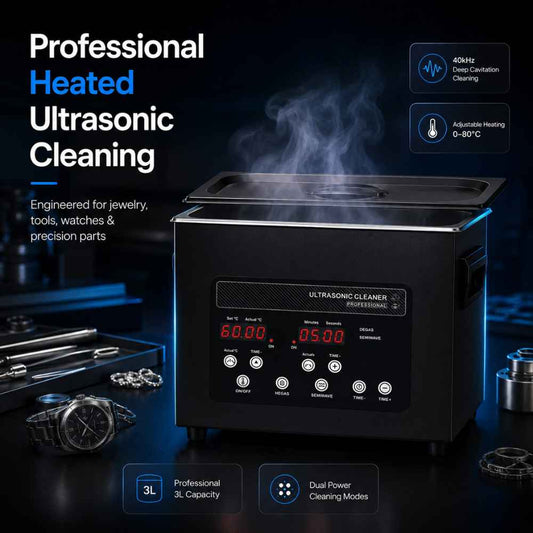
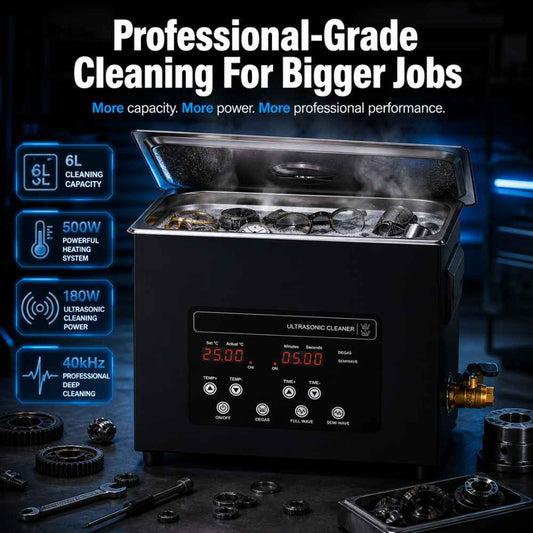
3–6L with thermostat up to 80°C. Heat accelerates saponification , oils and carbon leave in 20 minutes instead of 45. Required for gun parts, carburetors, and PCB flux.
Ideal for: gunsmiths, auto techs, small-batch manufacturing
Industrial dual-frequency tank
28kHz/40kHz switchable. Lower frequency attacks heavy fouling on steel; higher frequency protects coated optics. One tank, two cleaning profiles.
Retainers, Invisalign trays, mouthguards. Cavitation removes biofilm from wire anchors in under 5 minutes , no enzymatic soak required.
Firearms & gun components
Trigger groups, bolt carriers, barrel chambers. A heated 6L tank with 40kHz reaches carbon in lands and grooves that a brush can't access without scratching.
Eyeglasses & optical lenses
Nose pad channels, hinge barrels, anti-reflective coatings. Use 40kHz at room temperature to avoid thermal stress on bonded lens coatings.
PCB & electronic assemblies
Flux residue on through-hole joints. Isopropyl alcohol bath at 40kHz removes no-clean flux in 8 minutes without a syringe or manual scrubbing.
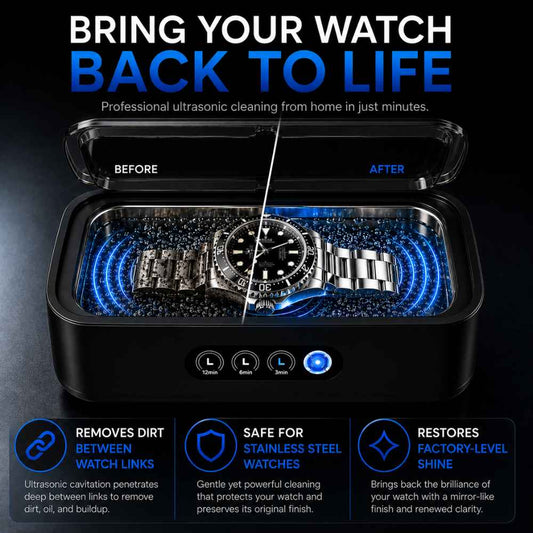
Jewelry & watches
Prong settings, chain links, engraved bands. The gentle agitation of a compact 40kHz unit dislodges skin oils and lotion residue without loosening pavé stones.
Carburetors & small engine parts
Jets, needle valves, emulsion tubes. A 3L heated bath dissolves varnish deposits that spray cleaner leaves behind, cutting rebuild time in half.
Common questions
Do I need water or a special solution?
Plain water works for most everyday items , glasses, retainers, jewelry. For heavy oils or carbon (gun parts, carbs), adding a few drops of dish soap or a dedicated ultrasonic cleaning solution cuts degreasing time significantly. Never use flammable solvents in a standard consumer unit.
Will ultrasonic cleaning damage gemstones or coatings?
Solid stones (diamonds, sapphires, rubies) handle ultrasonic cleaning well. Avoid it with emeralds, opals, pearls, or fracture-filled stones , the cavitation can widen existing inclusions. For anti-reflective lens coatings, stay under 50°C and use 40kHz, not 28kHz.
How long does a cleaning cycle take?
Light soiling on glasses or rings: 3–5 minutes. Retainers with mineral deposits: 5–8 minutes. Carbon fouling on gun parts in a heated bath: 20–30 minutes. Most digital units let you set the exact duration so you're not guessing.
What's the difference between 28kHz and 40kHz?
Lower frequency (28kHz) produces larger cavitation bubbles with more mechanical force , better for heavy fouling on hard metals. Higher frequency (40kHz) produces smaller, more numerous bubbles , gentler on coated surfaces and better for detailed geometry like watch movements or PCBs.
Find the right tank for what you're cleaning.
Use the filters above , or start with the most popular compact unit if you're not sure yet.
Choosing a selection results in a full page refresh.