


Sonirity
Ultrasonic Spectacle Cleaner | LensWave
Ultrasonic Spectacle Cleaner | LensWave
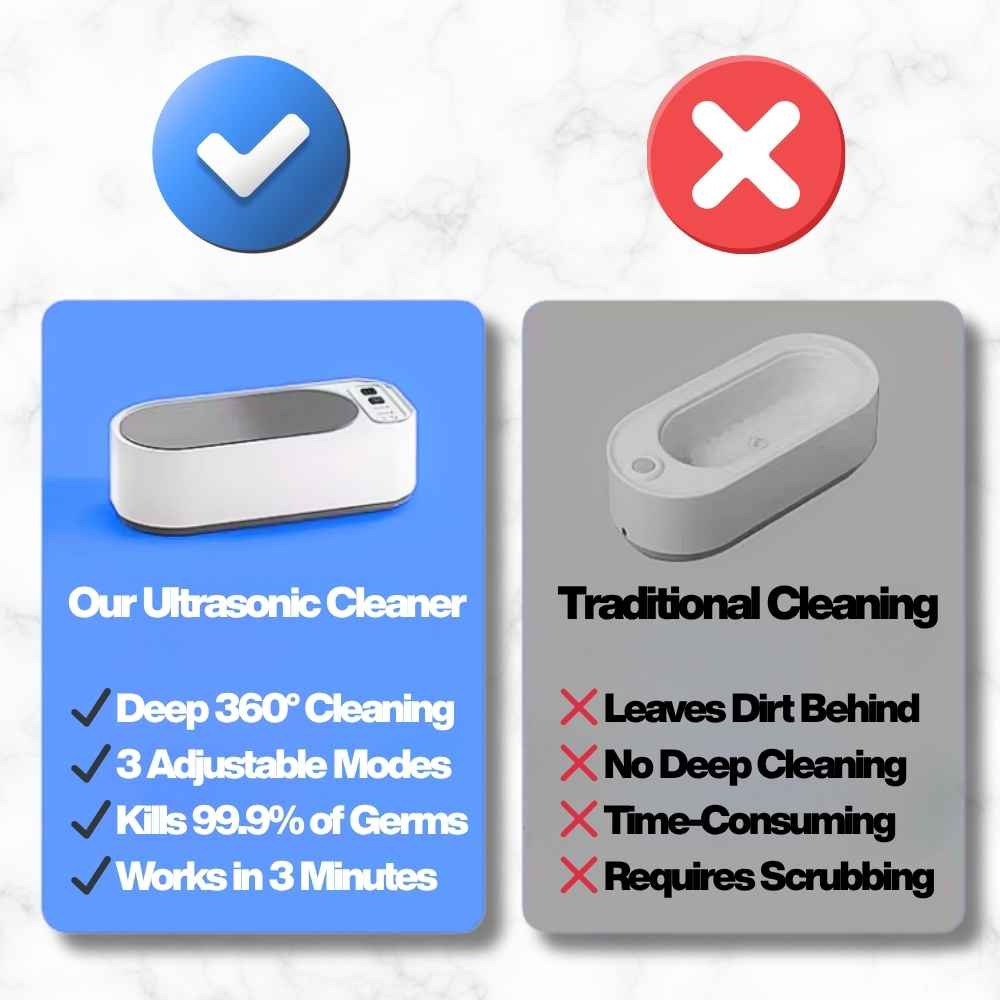
☑️ Cleans What Cloths Can't Reach
☑️ Ultrasonic Cavitation Technology
☑️ Auto Shut-Off, No Over-Cleaning
☑️ Results in Minutes, No Scrubbing
Couldn't load pickup availability
You wipe your lenses, hold them up to the light, and there it is again: the film of skin oil settled into the nose pad grooves and the hinge screws, completely immune to any microfiber cloth. A cloth cleans the flat surface. It does nothing for the geometry underneath.
This 50kHz ultrasonic spectacle cleaner generates cavitation bubbles small enough to reach the recessed metal where temples meet the frame front. One three-minute cycle at 50,000 vibrations per second, and the hardware underneath looks as clean as the glass.
At 20W on a 6V built-in battery, it runs three full cycles on a single charge without reaching for an outlet.
Why choose the LensWave Ultrasonic Spectacle Cleaner?
The 50kHz frequency is the detail that matters here. Most entry-level jewelry or general-purpose ultrasonic cleaner run at 40kHz, which produces larger cavitation bubbles suited to heavier contamination on smooth surfaces. At 50kHz, the bubbles are smaller and more numerous, which means they penetrate tighter geometries without the mechanical agitation that can stress thin acetate frames or loosen older screws. For daily eyewear that gets used, sat on, and picked up again, that distinction is not a minor one.
The three-minute first gear is calibrated for a quick clean before a meeting or a commute. Five minutes handles a deeper cycle after a dusty outdoor day. The continuous third gear runs until you stop it, which is useful if you are also cycling contact lens cases, a hearing aid component, or a piece of small jewelry through the same bath. The machine stops itself at the end of timed cycles so nothing sits in standing water longer than necessary.
No cord means the unit sits on a bathroom shelf, a desk, or travels in a toiletry bag without requiring a power source nearby. Charge it once, use it throughout the week.
Specs That Actually Matter on this Ultrasonic Spectacle Cleaner :
- 50kHz transducer frequency : Higher than the 40kHz standard found on most general-purpose cleaners. Smaller cavitation bubbles reach the micro-gaps in hinge hardware and nose pad channels that a 40kHz unit misses on complex frame geometry.
- Sub-300ml bath capacity : Sized for a single pair of glasses or a contact lens case. You are cleaning a small object, not cycling a large volume of water around it.
- 6V built-in battery, wireless operation : No cable dependency. The unit lives anywhere you get ready in the morning, not anchored to a socket.
- Three timed modes: 3 min / 5 min / continuous : Auto-shutoff on the timed modes ends the cycle on its own, so lenses never soak past the point of diminishing returns.
Built For the Eyeglass Wearer Who Actually Wears Their Glasses :
This is not for the person who treats their frames delicately. It is for the optician who handles a dozen pairs a day, the progressive lens wearer whose nose pads gray out every few days, or the person who simply cannot start the morning with a smudged field of view and has run out of patience with cloth-based solutions. Fill the tank, press once, come back in three minutes.
The first time I ran a pair of titanium frames through it, I was not expecting much from something this small. The hinge pivot on the left temple had been discolored for months. After a single three-minute cycle, the metal was bright again. I honestly checked whether the discoloration had moved somewhere else.
If the geometry of your frames has always been one step ahead of your cleaning cloth, 50kHz cavitation is the answer that cloth never was. Add it to your morning routine and find out what your lenses actually look like clean. And if you need, check our complete ultrasonic eyeglass cleaner.
Share


FAQ - Ultrasonic cleaner
What is an ultrasonic cleaner and how does cavitation work?
An ultrasonic cleaner uses a transducer to project high-frequency sound waves (typically 40 kHz) through a liquid bath. Those waves create and collapse millions of microscopic bubbles per second a process called acoustic cavitation. Each collapse generates a localized pressure jet that physically dislodges contaminants from every surface it reaches, including recesses, hinge barrels, prong settings, and blind holes that no brush can access.
The result is a contact-free clean that outperforms manual methods in both speed and thoroughness. A professional jeweler in Denver running an ultrasonic tank for 4 minutes on a gold ring pulls out more skin oil and lotion residue than 10 minutes of brushing could reach not because the machine is more powerful, but because cavitation reaches geometry that bristles physically cannot.
How long does an ultrasonic cleaning cycle take?
Cycle time depends on material and soil type, not machine power alone. Defaulting to the longest cycle is not safer over-cycling at elevated temperature can damage coatings and loosen adhesive-held components on items that were otherwise compatible.
Glasses (light soiling) : 2–4 min 50°C
Gold / platinum jewelry : 3–6 min 60°C
Retainer / aligner (mineral deposits) : 5–8 min 45°C
Watch bracelet (no movement) 5–8 min 50°C
Dental instruments : 10–15 min 60°C
Gun parts (carbon fouling) : 15–20 min 60°C
Carburetor bodies : 15–20 min 65°C
How do I contact Sonirity support?
📧 contact.sonirity@gmail.com
For product selection guidance, order questions, returns, and technical troubleshooting. For fastest response on product compatibility questions, include the item you're trying to clean and the model you're considering, Owen reviews all technical inquiries personally.